
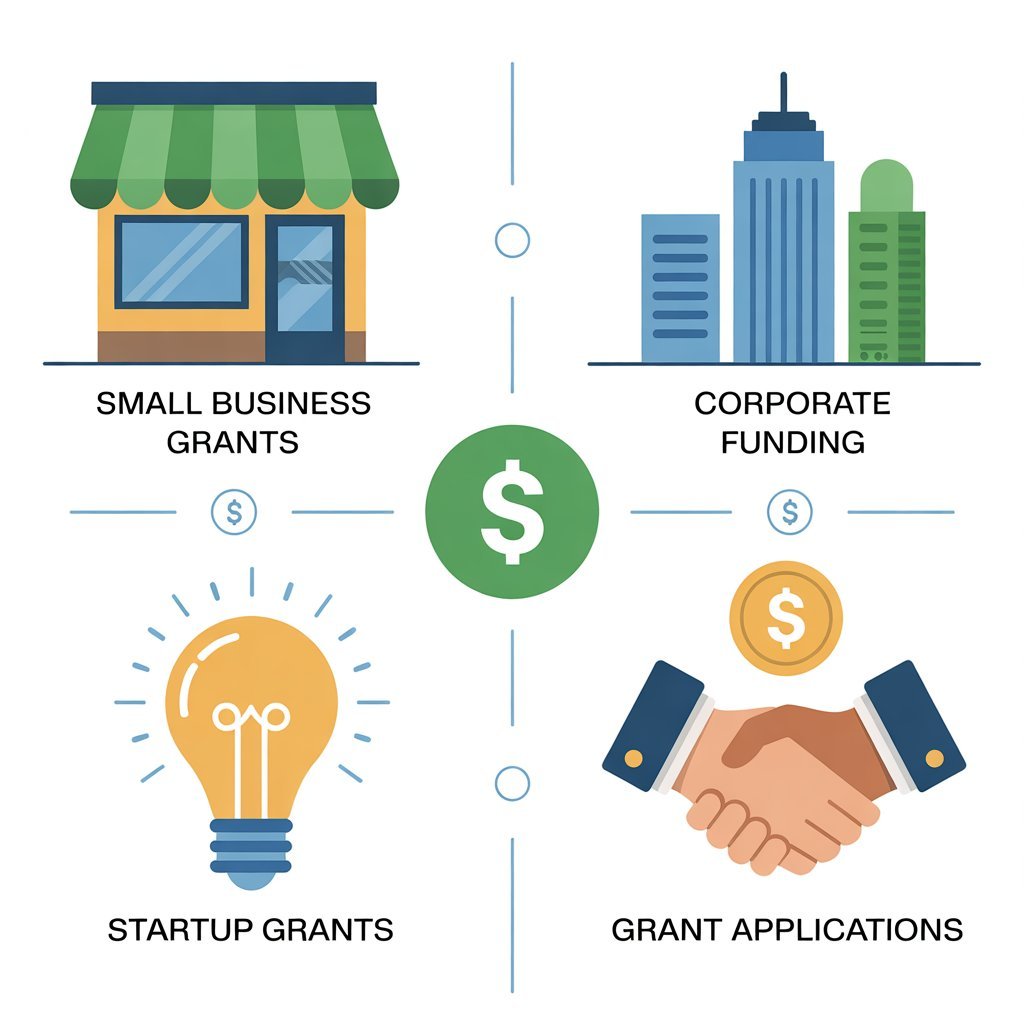

Starting or growing a business often requires capital and many entrepreneurs look for financing options that don’t create long-term debt. A grant for small business offers an excellent opportunity to receive funding without repayment, allowing business owners to invest in equipment, hiring, technology, marketing or expansion. While grants can be competitive, they provide valuable financial support for businesses with strong ideas and clear growth plans. Platforms like The Grant Portal help entrepreneurs discover thousands of funding opportunities tailored to their industry, location, and business goals, making the search process faster and more efficient.
What Is a Small Business Grant?
A small business grant refers to money that is awarded by a governmental agency, private foundation, non-governmental organization, or a corporation in order to promote small businesses development. In contrast to business loans, small business grants do not have to be returned, which makes them extremely appealing to entrepreneurs.
Grantors typically award business grants to businesses that stimulate innovation, employment, economic development, environmental sustainability, technology, healthcare, education or minority entrepreneurship, among others. There are specific qualifications that must be met for each grant opportunity.
Types of Small Business Grants
Business owners have access to numerous funding sources depending on their industry and business model.
Federal government grants typically support research, technology, manufacturing, agriculture, healthcare, and scientific innovation. These grants often involve detailed application processes but may provide significant funding.
State and local governments offer grants designed to stimulate regional economic development, create employment opportunities, and encourage entrepreneurship within their communities.
Private foundations and nonprofit organizations frequently provide grants to businesses addressing social challenges or developing innovative products and services.
Corporate grant programs also support entrepreneurs through funding competitions, accelerator programs, and community investment initiatives aimed at fostering economic growth.
Preparing Before Applying
Preparation is one of the most important factors in securing grant funding. Before submitting applications, business owners should organize key business documents, including registration certificates, tax records, financial statements and business plans.
A well-written business plan demonstrates your company’s mission, target market, competitive advantage, operational strategy, and financial projections. Grant reviewers want evidence that their investment will generate measurable results.
Clearly defining project goals and explaining how grant funds will be used also strengthens an application. Businesses with organized documentation often move through the review process more smoothly.
Writing a Strong Grant Application
Successful grant applications clearly communicate why funding is needed and how it will benefit both the business and the broader community.
Begin by explaining your company’s background, products or services and the challenge the funding will address. Describe specific objectives, expected outcomes, implementation timelines and measurable success indicators.
Include a detailed budget that outlines how every dollar will be spent responsibly. Grant reviewers appreciate transparency, realistic financial planning and achievable milestones.
Supporting your proposal with customer testimonials, market research, financial data, or industry statistics further demonstrates credibility and improves competitiveness.
Mistakes to Be Avoided Commonly
There are many reasons why some people do not receive grants because they ignore certain things.
Incomplete applications are one of the most common mistakes when applying. Lack of financial documents, unanswered questions or poor formatting can exclude a person even from a well-made proposal.
Another common mistake is the choice of grants which are not related to the industry or aim of the business. It helps save time and increases the probability of getting a grant.
Poorly written description of the project, unrealistic budget or financial plans can make an application weak as well.
Finding the Right Grant Opportunities
Searching for grants manually can take significant time, especially when new funding opportunities become available regularly.
Specialized funding platforms simplify the process by allowing businesses to search opportunities based on industry, location, business size, and eligibility requirements.
The Grant Portal offers an extensive database of grant opportunities that helps entrepreneurs identify programs matching their goals. Instead of visiting multiple websites individually, business owners can efficiently explore funding sources from one centralized platform.
Using professional grant search tools increases visibility into available funding while helping businesses stay informed about new grant announcements throughout the year.
Managing Grant Funds Successfully
Receiving a grant is only the beginning of the funding relationship. Responsible financial management ensures continued success and builds credibility with funding organizations.
Businesses should maintain detailed financial records, track project expenses, document progress and prepare reports according to grant requirements. Many funding organizations request periodic updates demonstrating how grant money has contributed to business growth.
Meeting reporting deadlines and communicating openly with grant providers strengthens long-term relationships and may improve eligibility for future funding opportunities.
Good grant management reflects professionalism and reinforces trust between businesses and funding organizations.
Building a Long-Term Funding Strategy
While grants provide valuable financial assistance, successful businesses rarely depend on a single funding source. Combining grants with traditional financing, private investment, business revenue and strategic partnerships creates greater financial stability.
Business owners should continuously monitor new funding opportunities, improve grant-writing skills and maintain updated business documentation throughout the year. Networking with local business organizations and attending entrepreneurial events can also uncover additional grant opportunities.
Ultimately, securing a grant for small business requires preparation, persistence and strategic planning. By using trusted resources like The Grant Portal, entrepreneurs can identify relevant funding opportunities, strengthen their applications, and secure financial support that helps their businesses grow, innovate and succeed in today’s competitive marketplace.
Frequently Asked Questions
What is a grant for small business?
A grant for small business is funding provided by governments, corporations, foundations or nonprofit organizations that does not usually require repayment, provided the recipient meets the grant’s terms.
Who can apply for small business grants?
Eligibility varies by program, but many grants are available to startups, existing small businesses, women-owned businesses, veteran-owned businesses, minority-owned businesses and businesses in specific industries.
Do I have to repay a business grant?
In most cases, no. Grants are typically non-repayable if the recipient follows the grant conditions and uses the funds for approved purposes.
How can I improve my chances of receiving a grant?
Prepare a detailed business plan, submit complete documentation, demonstrate measurable business impact, create a realistic budget and apply only for grants that match your business goals.
Where can I find small business grants?
Business owners can search for grants through government agencies, local economic development organizations, private foundations, corporate funding programs and dedicated grant databases like The Grant Portal.


