
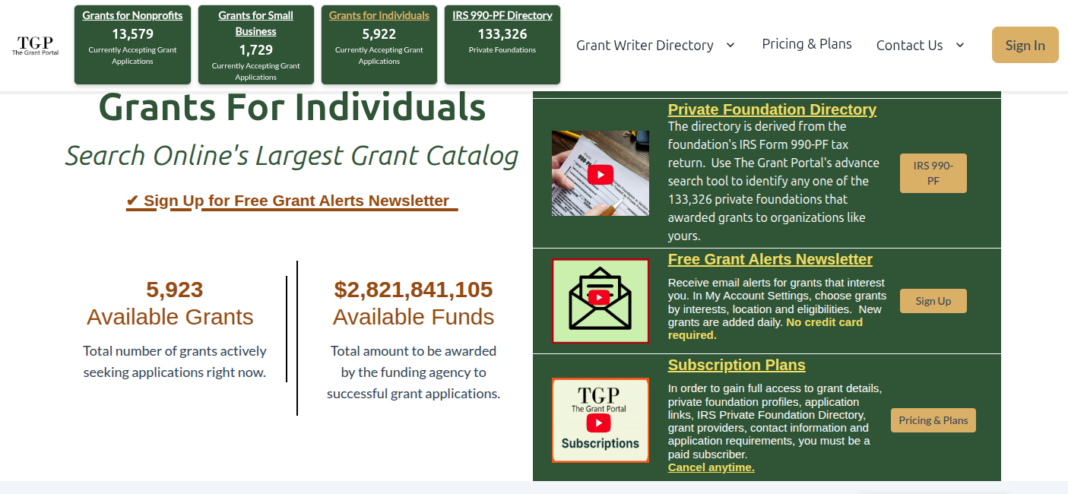

Finding reliable grant providers is an important step for nonprofits, small businesses, educational institutions and individuals seeking financial support. Grant providers may include government agencies, private foundations, corporations, charitable organizations and other funding institutions. Each provider establishes its own priorities, eligibility requirements, application process and funding conditions. Understanding these details can help applicants focus their research and prepare proposals that align with a funder’s objectives. The Grant Portal helps grant seekers explore funding opportunities through a searchable catalog, eligibility filters, and grant alerts, making it easier to begin researching potential sources of support.
Understanding the Role of Grant Providers
Grant providers are organizations or institutions that make funding available for specific purposes. Their support may be intended for community programs, education, research, arts and culture, business development, environmental initiatives, health services or other defined activities.
Unlike loans, grants generally do not require repayment when recipients follow the award terms. However, grant funding is not automatically available to every applicant. Providers establish eligibility rules, review applications and decide which proposals receive funding. Applicants should read each opportunity’s official guidelines carefully and confirm requirements directly with the funding organization.
Grant providers may also impose conditions on how funds can be used. Some awards support a specific project, while others may contribute to program delivery, equipment, research or organizational capacity. Understanding the intended use of funding before applying can help prevent mismatches between a project and a grant opportunity.
Explore Different Types of Grant Providers
Government agencies are one source of grant funding. They may support public services, research, education, economic development, cultural programs and community initiatives. Government opportunities often include detailed application instructions, eligibility requirements, reporting obligations and defined submission periods.
Private foundations provide another source of funding. Many foundations focus on particular causes, geographic areas, populations or types of organizations. Reviewing a foundation’s mission and past giving can help applicants understand whether their work is relevant to its priorities.
Corporate grant programs may support community investment, entrepreneurship, workforce development, education or other areas connected to a company’s giving strategy. Nonprofit organizations and community groups may also provide funding or administer grant programs on behalf of other institutions.
The provider’s identity matters because the application process and requirements can vary significantly. Applicants should verify the source of funding and understand who makes the final award decision.
Match Funding Opportunities With Your Purpose
Before searching for grants, define the purpose of your funding request. A nonprofit seeking support for youth services may need a different type of grant from a small business purchasing equipment or an artist developing a creative project.
Write a short description of the project, the people or community it will serve, the amount of funding needed and the expected results. This information can help you search using relevant terms and identify opportunities that are connected to your objectives.
The Grant Portal allows visitors to search grant listings by keywords, interest areas, location and eligibility. Its AI-powered assistant, TGP-Man, is designed to help users describe their funding needs in everyday language and identify potentially relevant listings.
These tools can help organize the discovery process, but applicants should still review each grant’s official information before deciding whether to apply.
Review Eligibility Requirements Carefully
Eligibility is one of the first details to check when researching grant providers. Some opportunities are open only to registered nonprofit organizations, while others may accept businesses, educational institutions, government entities or individuals.
Requirements may also depend on location, organizational structure, project type, applicant experience or the population served. A grant may appear relevant to your project but still be unavailable because your organization does not meet a specific condition.
For example, the U.S. federal Grants.gov guidance explains that eligibility is defined in each funding opportunity’s notice and that applicants should confirm they qualify before investing time in an application.
Create a checklist of requirements for each opportunity you consider. Confirm the eligible applicant types, geographic restrictions, project activities, required registrations, matching contributions, and submission deadlines. If any requirement is unclear, contact the provider through its official communication channel.
Prepare a Clear and Complete Grant Application
Once you identify a suitable opportunity, prepare an application that directly addresses the provider’s stated priorities. A clear proposal should explain the need being addressed, the project’s objectives, planned activities, expected outcomes and the people or communities that will benefit.
Use specific, realistic language. Instead of making broad claims, explain what the project will do and how progress will be measured. If the provider requests supporting documents, prepare them in the required format and ensure that all information is consistent across the application.
A project budget should connect directly to the proposed activities. Explain the purpose of major expenses and check whether the grant allows the costs you plan to include. Some providers may require matching funds, financial statements, organizational documents or evidence of previous work.
Before submitting, review the application for missing information, unclear answers, incorrect attachments and compliance with the provider’s instructions. A complete and carefully prepared application helps reviewers understand the proposal being presented.
Keep Track of Deadlines and Funding Conditions
Grant providers may use fixed deadlines, rolling application periods or multiple funding cycles. Record the submission date and allow time to collect documents, request approvals and resolve questions.
A grant tracking spreadsheet can include the provider’s name, program title, funding purpose, eligibility notes, application link, deadline, required documents and follow-up dates. Keeping these details together can reduce confusion when researching several opportunities at once.
After receiving an award, recipients should review the grant agreement before spending funds. The agreement may specify eligible expenses, reporting schedules, recordkeeping expectations, project milestones, and procedures for requesting changes. Maintaining organized records throughout the project can make reporting and compliance easier.
Use The Grant Portal to Research Grant Providers
The Grant Portal is an online grant catalog for nonprofits, small businesses, and individuals. Its website describes search tools for exploring opportunities by keyword, interest, location and eligibility. It also offers free grant alerts and a Grant Writer Directory for users seeking application-writing assistance.
The platform is a grant discovery resource rather than a funding organization. The Grant Portal states that it does not fund grants, recommend awards or determine applicant eligibility; those decisions belong to the individual grant providers.
This distinction is important. Use the catalog to identify opportunities and organize research, then consult the provider’s official guidelines and application instructions for final requirements. You can begin at and explore its search features to find grants relevant to your organization or project.
Build a Consistent Grant Research Process
Grant research is often more effective when it becomes a regular activity rather than a task completed only when funding is urgently needed. Set aside time to review new opportunities, update your project information and maintain a calendar of upcoming deadlines.
Keep a reusable collection of organizational documents, project descriptions, budgets and outcome information. Update these materials when your activities or circumstances change. Having accurate information ready can make it easier to respond when a relevant opportunity becomes available.
It is also useful to review previous applications. Record which opportunities you pursued, whether you received a response and any feedback provided by the funder. This information can help refine future proposals and prevent repeated administrative mistakes.
Find Grant Providers That Align With Your Mission
Identifying suitable grant providers involves more than searching for available funding. Applicants should understand each provider’s purpose, confirm eligibility, review application instructions and prepare a proposal that clearly explains the project and its expected results. The Grant Portal can support the initial research process by bringing grant listings and search tools together in one place. Use it to explore opportunities, then verify all requirements with the funding organization before applying.
Frequently Asked Questions
What are grant providers?
Grant providers are organizations or institutions that offer funding for defined purposes. They may include government agencies, private foundations, corporations, charitable organizations and other funding institutions.
How can I find grant providers for my organization?
Start by defining your project, location, applicant type and funding needs. Search grant directories, review provider websites, and confirm eligibility and application details before applying.
Does The Grant Portal provide grant funding?
No. The Grant Portal is a grant search catalog. It states that it does not fund grants or determine eligibility; individual grant providers make those decisions.
What should I check before applying for a grant?
Review applicant eligibility, funding purpose, geographic restrictions, deadlines, required documents, allowable expenses and reporting conditions. Confirm unclear details with the provider.
Can individuals and small businesses apply for grants?
Some grant opportunities accept individuals or small businesses, while others are restricted to specific organizations or applicant types. Always check the eligibility section of each opportunity.
How can The Grant Portal help me research funding?
The Grant Portal offers searchable grant listings, filters, free grant alerts and its TGP-Man assistant to help users identify opportunities that may match their funding needs.


